Once a month we will be sharing a marine species reported via the Fair Isle Marine WhatsApp group. This group is a space for community members and visitors to the isle to share any interesting marine finds. These reports also contribute to marine species records for Fair Isle to help monitor changes in biodiversity.
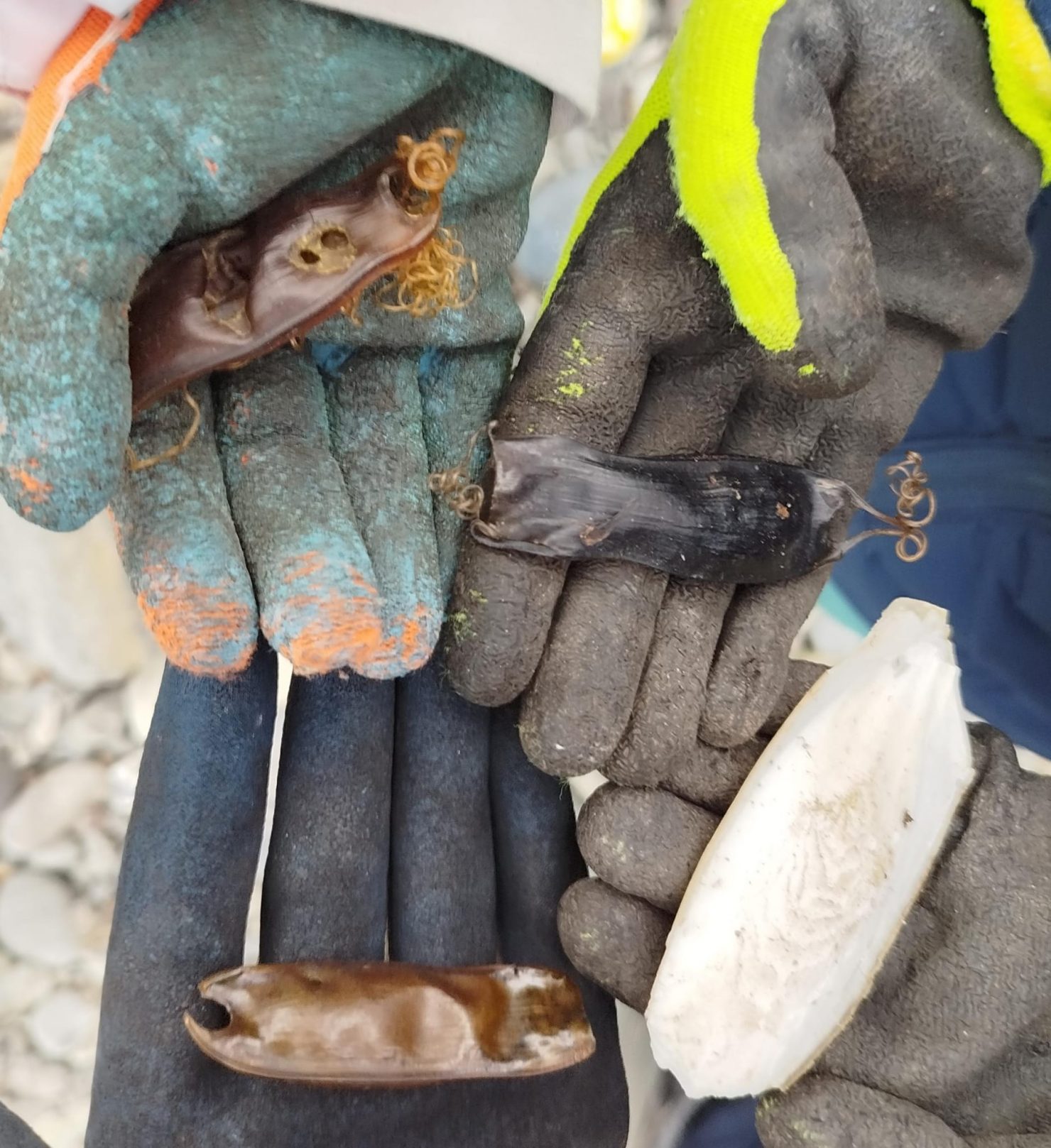
This month, three small-spotted catshark egg cases were found by each of the Fair Isle Primary School children during one of their regular beach cleans at Muckle Uri Geo, along with a cuttlebone found by Ander.
Fair Isle Primary School has adopted Muckle Uri Geo as the site for their regular beach cleans, which they aim to carry out four times each year. By following the standardised methodology of the Marine Conservation Society, they not only remove large amounts of litter but also record the types and quantities collected. This data is then submitted to national databases, helping to monitor the sources and categories of litter washing up on our shores.
Small-spotted catsharks (Scyliorhinus canicula), also known as dogfish or rock salmon, are the most common species of shark found in British waters. They have very rough skin and distinctive dark spots on their upper side. Their eggs known as “mermaid’s purses” (pictured here), are often found washed up on beaches and are characterised by the fine, curly tendrils which protrude from each corner and measure 5-7 cm in length. The colour of small-spotted catsharks can vary. These egg cases are a good indicator that breeding individuals are present nearby.
This handy guide from The Shark Trust can help with egg case identification.
The common cuttlefish (Sepia officinalis) is a member of the mollusc family known as cephalopods and is closely related to squid and octopus. The oval-shaped cuttlebones, like the one pictured here, are often found washed up on our shores. These hard, chalky structures help cuttlefish maintain buoyancy.
Well done to the Fair Isle Primary School for their brilliant work! 
 David Parnaby